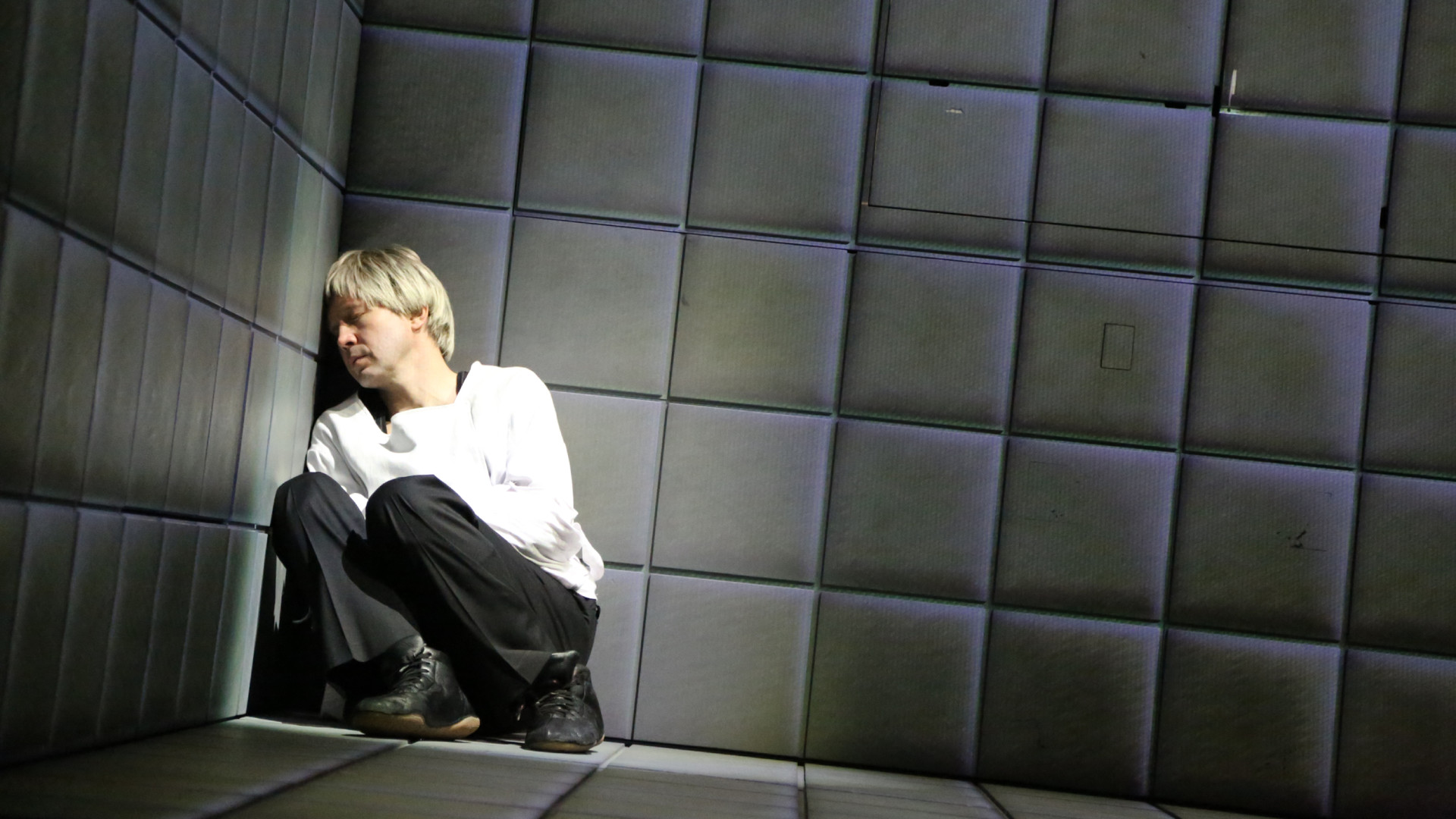
Remarkably gifted in every aspect of theatre, Robert Lepage is equally talented as a stage director, playwright and screenwriter, actor, and film director. His creative and original approach has helped him gain international recognition and shake the very foundations of classical directing dogma, primarily through the use of new technologies in theatre. Robert Lepage draws his inspiration from contemporary history, and his relevant and unconventional works transcend all boundaries.
Education
Robert Lepage was born in Quebec in 1957. He developed an early interest in geography; later, after encountering all forms of art, his attention was particularly drawn to theatre. In 1975, at the age of 17, Robert Lepage enrolled at the Conservatoire d'art dramatique de Québec.
After studying for a time in Paris, Lepage returned to Quebec in 1978 and took part in numerous creative projects, gaining experience as an actor, playwright, and director. Two years later, he joined the Théâtre Repère.
International recognition from the start
In 1984, Lepage's play "Circulations", after touring Canada, received an award for best Canadian production at the Quinzaine Internationale de Théâtre de Québec. The following year, the Canadian gained international recognition with "The Dragons' Trilogy"; this was followed by "Vinci" (1986), "The Liar" (1987), and "Tectonic Plates" (1988). In 1988, Robert Lepage founded his own management company, Robert Lepage Inc. (RLI).
From 1989 to 1993, Robert Lepage served as artistic director of the French Theatre at the National Arts Centre in Ottawa, while continuing to work on his own projects. During this period, he staged "Needles and Opium" (1991), "Coriolanus", "Macbeth", and "The Tempest" (1992). The Canadian became the first North American to direct a Shakespeare play at the Royal National Theatre ("A Midsummer Night's Dream", 1992).
Ex Machina – a turning point
The turning point in Robert Lepage's career came with the founding of his own multidisciplinary production company, Ex Machina, in 1994. Under Lepage's artistic direction, the new team produced a number of productions, starting with "The Seven Streams of the River Ota" (1994), "A Midsummer Night's Dream" (1995), and the one-man show "Elsinore" (1995).
Film career
In 1994, Lepage made his debut in international cinema: the Canadian directed the feature film "The Confessional", based on his own screenplay; a year later, the film was shown at the Directors' Fortnight at the Cannes Film Festival.
Lepage's film career continued with "The Liar" (1996), "No" (1997), "Possible Worlds" (2000) (his first feature film screenplay written in English), and finally a film adaptation of his own play "The Far Side of the Moon".
"La Caserne"
The multidisciplinary production centre La Caserne opened in Quebec under Robert Lepage's direction in 1997. At this new venue, Lepage and his team created and produced "The Geometry of Miracles" (1998), "Greenwich Mean Time" (1999), "The Far Side of the Moon" (2000), "The Blue House" (2001) (La Casa Azul), a new version of "The Dragons' Trilogy" with a new cast (2003), and "Busker's Opera" (2004). These were followed by "The Andersen Project" (2005), "Lipsynch" (2007), "The Blue Dragon" (2008), and "Eonnagata" (2009).
The production "Cards" (2012) consists of four parts: "Spades", "Hearts", "Diamonds", and "Clubs", each exploring a world created according to the values embodied by the suit. "Spades" premiered in Madrid in May 2012. "Hearts" premiered in autumn 2013; around the same time, a new production of "Needles and Opium" was released.
Rock concerts, exhibitions, circus, and architectural projections
Robert Lepage is often invited to apply his talent in new fields. In 1993, the Canadian staged Peter Gabriel's concert tour "Secret World Tour"; his collaboration with the English musician continued in 2002 with "Growing Up Tour".
In 2000, Robert Lepage participated in organizing the exhibition "Métissages" at the Museum of Civilization in Quebec.
Robert Lepage is the set designer and director of the following Cirque du Soleil shows: "KA" (2005), a permanent show in Las Vegas, and "TOTEM" (2010), performed in a big top that toured worldwide.
In 2008, for the 400th anniversary of Quebec City, Lepage and Ex Machina created "The Image Mill™", the largest architectural projection in the world. In 2009, on the same site, a permanent light installation, "Aurora Borealis", inspired by the colors of the northern lights, was created.
Opera
Robert Lepage's triumphant entry into the world of grand opera came in 1993 with a production featuring two one-act operas: "Duke Bluebeard's Castle" and "The Expectation". They were followed by "The Damnation of Faust" (1999), first presented at the Saito Kinen Festival in Matsumoto, Japan, and then at the Paris National Opera and the Metropolitan Opera in New York.
Among the Canadian's other achievements in opera: a production of "1984" based on George Orwell's novel, w
Education
Robert Lepage was born in Quebec in 1957. He developed an early interest in geography; later, after encountering all forms of art, his attention was particularly drawn to theatre. In 1975, at the age of 17, Robert Lepage enrolled at the Conservatoire d'art dramatique de Québec.
After studying for a time in Paris, Lepage returned to Quebec in 1978 and took part in numerous creative projects, gaining experience as an actor, playwright, and director. Two years later, he joined the Théâtre Repère.
International recognition from the start
In 1984, Lepage's play "Circulations", after touring Canada, received an award for best Canadian production at the Quinzaine Internationale de Théâtre de Québec. The following year, the Canadian gained international recognition with "The Dragons' Trilogy"; this was followed by "Vinci" (1986), "The Liar" (1987), and "Tectonic Plates" (1988). In 1988, Robert Lepage founded his own management company, Robert Lepage Inc. (RLI).
From 1989 to 1993, Robert Lepage served as artistic director of the French Theatre at the National Arts Centre in Ottawa, while continuing to work on his own projects. During this period, he staged "Needles and Opium" (1991), "Coriolanus", "Macbeth", and "The Tempest" (1992). The Canadian became the first North American to direct a Shakespeare play at the Royal National Theatre ("A Midsummer Night's Dream", 1992).
Ex Machina – a turning point
The turning point in Robert Lepage's career came with the founding of his own multidisciplinary production company, Ex Machina, in 1994. Under Lepage's artistic direction, the new team produced a number of productions, starting with "The Seven Streams of the River Ota" (1994), "A Midsummer Night's Dream" (1995), and the one-man show "Elsinore" (1995).
Film career
In 1994, Lepage made his debut in international cinema: the Canadian directed the feature film "The Confessional", based on his own screenplay; a year later, the film was shown at the Directors' Fortnight at the Cannes Film Festival.
Lepage's film career continued with "The Liar" (1996), "No" (1997), "Possible Worlds" (2000) (his first feature film screenplay written in English), and finally a film adaptation of his own play "The Far Side of the Moon".
"La Caserne"
The multidisciplinary production centre La Caserne opened in Quebec under Robert Lepage's direction in 1997. At this new venue, Lepage and his team created and produced "The Geometry of Miracles" (1998), "Greenwich Mean Time" (1999), "The Far Side of the Moon" (2000), "The Blue House" (2001) (La Casa Azul), a new version of "The Dragons' Trilogy" with a new cast (2003), and "Busker's Opera" (2004). These were followed by "The Andersen Project" (2005), "Lipsynch" (2007), "The Blue Dragon" (2008), and "Eonnagata" (2009).
The production "Cards" (2012) consists of four parts: "Spades", "Hearts", "Diamonds", and "Clubs", each exploring a world created according to the values embodied by the suit. "Spades" premiered in Madrid in May 2012. "Hearts" premiered in autumn 2013; around the same time, a new production of "Needles and Opium" was released.
Rock concerts, exhibitions, circus, and architectural projections
Robert Lepage is often invited to apply his talent in new fields. In 1993, the Canadian staged Peter Gabriel's concert tour "Secret World Tour"; his collaboration with the English musician continued in 2002 with "Growing Up Tour".
In 2000, Robert Lepage participated in organizing the exhibition "Métissages" at the Museum of Civilization in Quebec.
Robert Lepage is the set designer and director of the following Cirque du Soleil shows: "KA" (2005), a permanent show in Las Vegas, and "TOTEM" (2010), performed in a big top that toured worldwide.
In 2008, for the 400th anniversary of Quebec City, Lepage and Ex Machina created "The Image Mill™", the largest architectural projection in the world. In 2009, on the same site, a permanent light installation, "Aurora Borealis", inspired by the colors of the northern lights, was created.
Opera
Robert Lepage's triumphant entry into the world of grand opera came in 1993 with a production featuring two one-act operas: "Duke Bluebeard's Castle" and "The Expectation". They were followed by "The Damnation of Faust" (1999), first presented at the Saito Kinen Festival in Matsumoto, Japan, and then at the Paris National Opera and the Metropolitan Opera in New York.
Among the Canadian's other achievements in opera: a production of "1984" based on George Orwell's novel, w